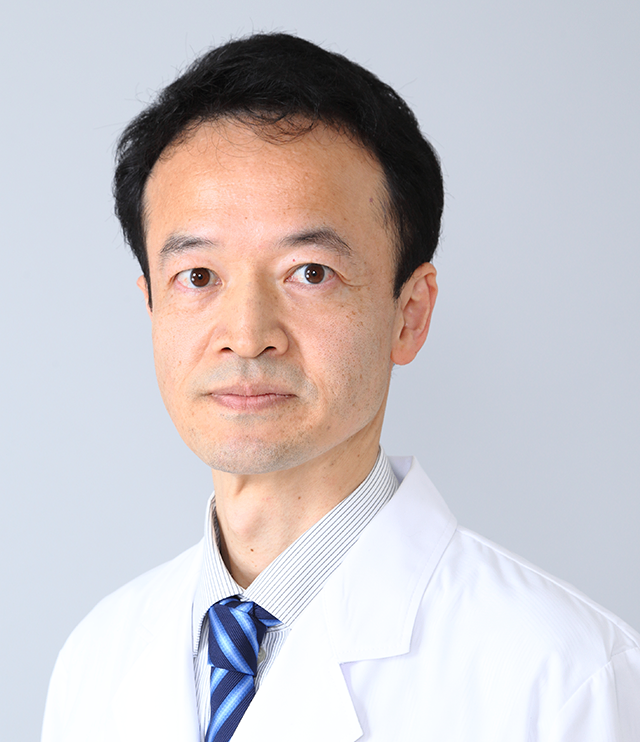
※ This column is content restructured for Korean readers with the official permission of the original author, Professor Shinya Hayasaka.
Research that started with a single phone call.
Nice to meet you. I am Shinya Hayasaka, a specialist in hot spring therapy and a Doctor of Medicine.
About 25 years ago, while I was working in local healthcare, I received a phone call. It was from a nursing home staff member who was helping an elderly person with their bath. "Sir, my blood pressure is 170. Is it okay to go into the bath?" Since the reading was significantly higher than the standard limit (140), I replied, "Don't do it," and hung up the phone.
However, a question suddenly crossed my mind. Is 140 safe? What about 150? Up to what blood pressure level is bathing safe? Even after scouring textbooks and research papers, there was no clear answer. "We must conduct proper research and provide an answer based on evidence." — And so, I began researching 'bathing,' a topic that no one had seriously addressed until then. Over the past 25 years, having medically examined the bathing habits of more than 70,000 people, I have discovered this: bathing has surprisingly amazing effects on our health, far beyond what we could have imagined.
The Power of Bathing Proven by Numbers.
The habit of soaking in a bathtub every day increases 'healthy lifespan'
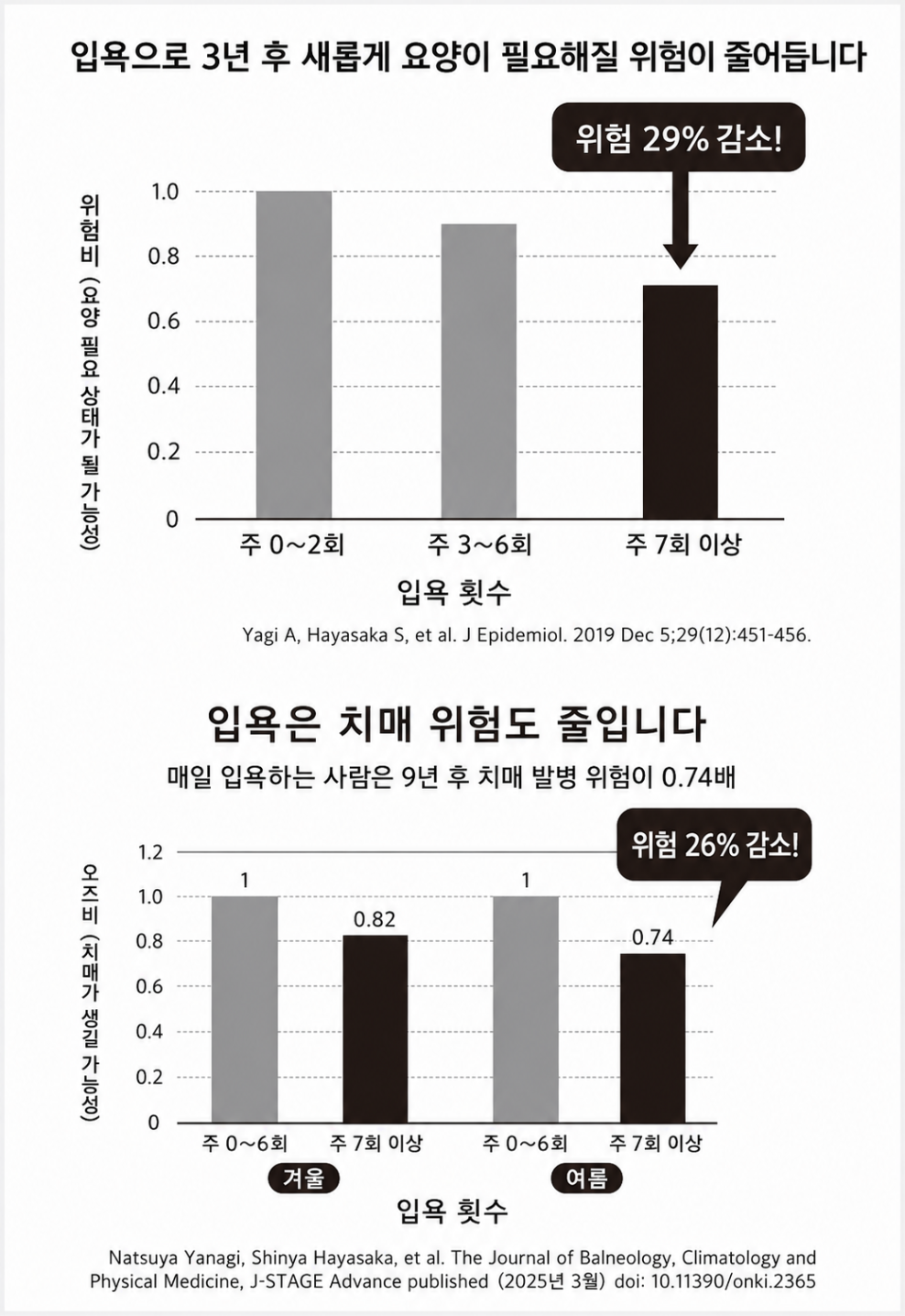
I will show you with data, not words. A three-year follow-up study of approximately 14,000 independent seniors aged 65 and older found that those who took a bath at least seven times a week during the winter had a 29% lower risk of being newly assessed for long-term care compared to those who did so two times or less per week. Another study showed that people with a habit of bathing every day during the summer had a 26% lower risk of dementia after nine years. (Figure 1)
That is not all.
Stroke risk — reduced by about 26%
Risk of myocardial infarction — reduced by about 35%
Diabetes management status — 1.43 times better
Both nursing care and dementia are factors that erode 'healthy life expectancy' (the period during which one lives healthily on their own). The fact that bathing lowers this risk means that healthy life expectancy can be extended through bathing (the gap between average life expectancy and healthy life expectancy is not just a concern for Japan, but a challenge shared by Korea, which is also experiencing rapid population aging).
(Source:『Entering the world, living in the world, living in the world』)
📘 Onlive Guide Points
Taking a bath every day is a habit that increases the 'time spent living healthily.' The data already says so.
80% of the effect comes from 'warmth'.
Thermogenic effect — raises core body temperature
When you think of a bath, the first image that comes to mind is probably "warmth." This very natural warmth—that is, the thermal effect—is the key, accounting for about 80% of the health benefits.
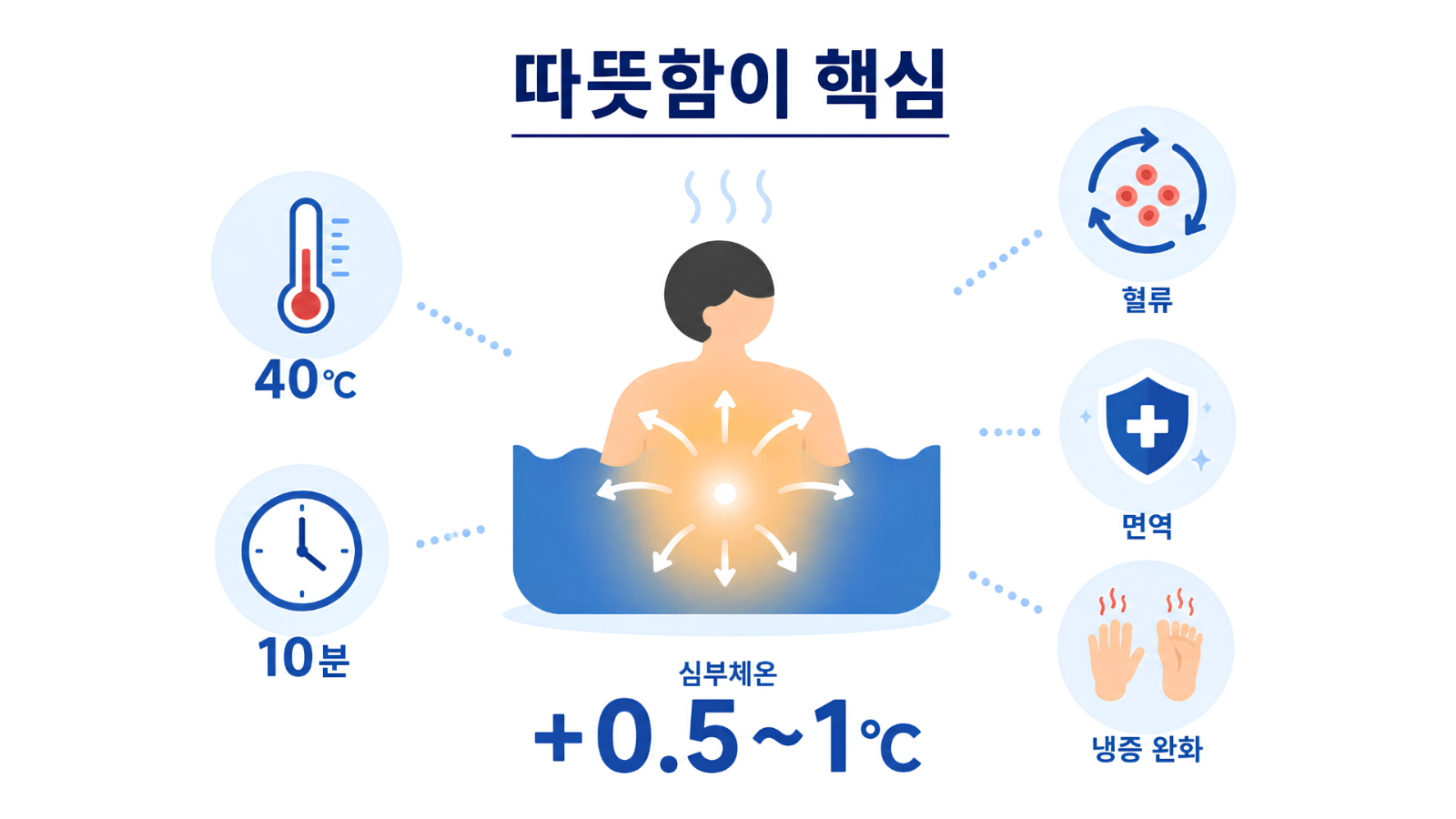
Soaking in water around 40℃ for just about 10 minutes raises the body's core temperature by 0.5 to 1℃
It goes up. It is different from simply warming the skin with thick clothes. Because it warms the blood itself and circulates it throughout the body, warm blood flows even to the fine blood vessels at the fingertips and toes, improving cold extremities. Furthermore, when the body warms up, immune cells such as white blood cells and NK cells become more active, increasing resistance against viruses, bacteria, and abnormal cells. In a sense, you are boosting your immunity with just one bath.
📘 Onlive Guide Points
At 40℃ for 10 minutes, core body temperature rises by 0.5 to 1℃. Blood flow and immunity awaken together.
There are six more things besides warmth.
The remaining processes hidden underwater
If the thermal effect is the lead, the remaining six effects are reliable supporting roles. Underwater, these forces work simultaneously and in combination.
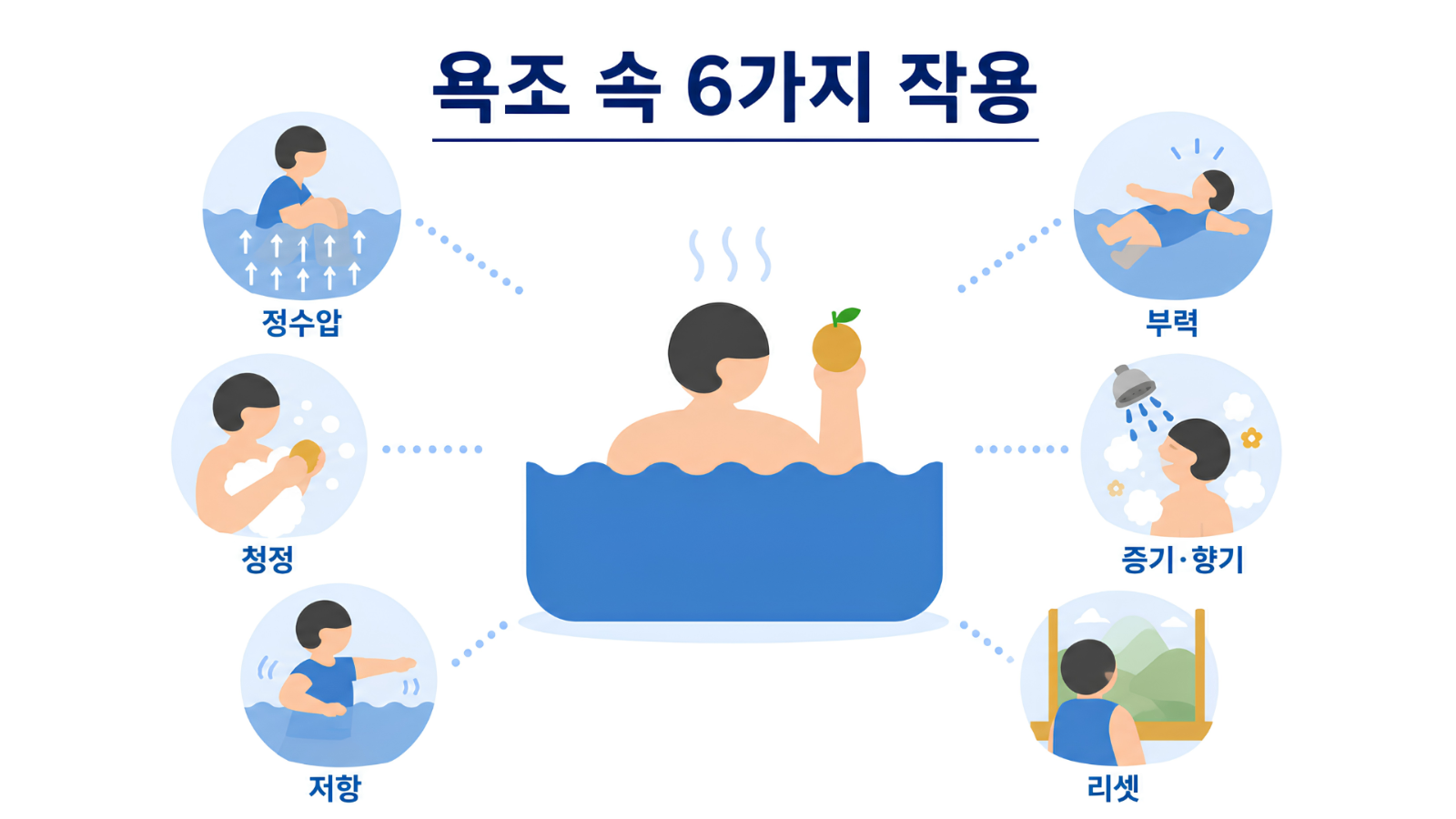
Hydrostatic Pressure — Water gently constricts the body, pushing blood and lymph fluid accumulated in the lower extremities toward the heart. This reduces swelling and improves blood circulation.
Buoyancy — Your body weight feels about one-tenth of its actual weight in water. The strain on joints and muscles is reduced, relaxing the body and making you feel comfortable.
Cleansing Action — Pores open, washing away old dead skin cells, sebum, and germs that are not removed by regular washing or showering. It keeps the skin clean and reduces infections and skin troubles.
Steam and Fragrance Effect — Steam moistens the mucous membranes of the nose and throat, revitalizing the function of ciliated cells that filter out viruses and bacteria (a particularly welcome effect for those who spend long periods in dry, air-conditioned rooms).
Resistance — Water provides about 3 to 4 times more resistance than land. Simply moving your hands and feet slowly in the bathtub provides light strength training without putting strain on your joints.
Openness vs. Closed Space Function — A 'special space' where you undress and briefly disconnect from the outside world. Your own time, undisturbed by anyone, resets your weary mind.
📘 Onlive Guide Points
Swelling, muscle strength, immunity, and even the mind. The moment you immerse yourself in the bathtub, six functions work simultaneously.
A place that washes away even the fatigue of the mind.
So, it's bath time again.
For those of us accustomed to the culture of public bathhouses and saunas shared by the whole family, "alone time" in a home bathtub may actually feel even more precious. Although the habit of skipping baths due to busyness (the so-called "bath-cancellers") is on the rise, this simple habit, which can be practiced daily without the need for money or equipment, is truly the simplest health practice in the world.
Oh, by the way, regarding the "blood pressure of 170" question at the beginning—I will properly explain the answer with the evidence in the next episode.
Hayasaka Shinya
Specialist in Hot Spring Therapy, Doctor of Medicine, Professor at Tokyo Metropolitan University
Director of the Hot Spring Medical Science Research Institute, Japan Health Development Foundation
The leading expert in the medical study of bathing as a lifestyle habit. Author of *The Best Bathing Method* (Yamato Shobo) and many others.