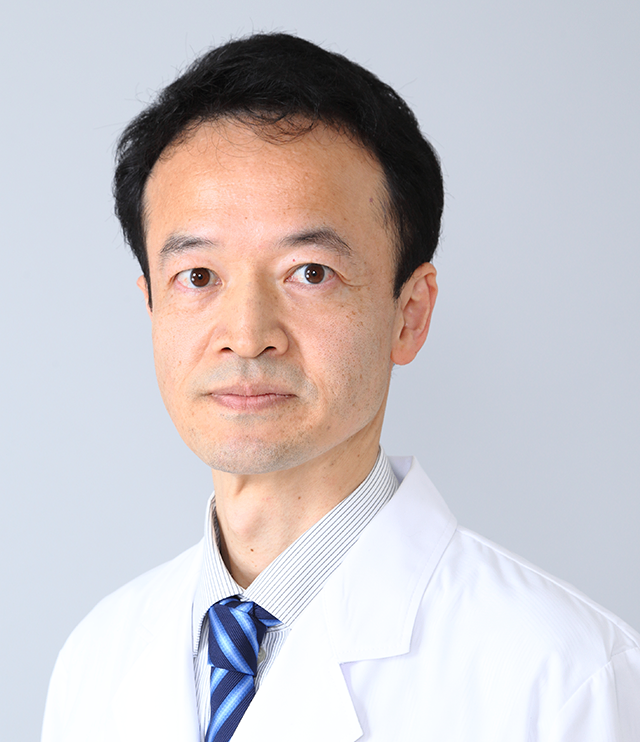
※ This column is content restructured for Korean readers with the official permission of the original author, Professor Shinya Hayasaka.
When the environment changes, the body also gets tired.
Nice to meet you. I am Shinya Hayasaka, a specialist in hot spring therapy and a Doctor of Medicine.
Admission to school, employment, new assignments—many people start a new life in the spring (the same is true for spring in Korea, where March sees a rush of new semesters, new hires, and personnel transfers). An environment where everything—from the people around you to the nature of your studies or work—changes is a greater source of stress than one might expect.
According to the famous "Life Event Stress Scale" developed by Drs. Holmes and Rahe, when "the death of a spouse" is set at 100 points, "changes at work" are rated at 39 points, "transferring" at 35 points, and "entering school or graduating" at 26 points. This means that a fresh start is always accompanied by considerable stress. In this busy time when there is little room for peace of mind, it is not easy to set aside time to relieve stress. Therefore, I recommend utilizing your daily bath time.
Now is a time when the autonomic nervous system is easily shaken.
The overheating of the sympathetic nervous system must be cooled down.
The autonomic nervous system maintains the body's balance through the pairing of the sympathetic and parasympathetic nerves, working together like a seesaw. Simply put, the sympathetic nervous system is in 'excitement/fight mode,' while the parasympathetic nervous system is in 'relaxation/rest mode.'
When trying to adapt to a new environment, the sympathetic nervous system takes precedence. As a result, blood pressure rises, the pulse quickens, sweating occurs, and muscles tense up, causing the body to become stiff. If this state of overheating persists, the tension does not release, and before you know it, both your mind and body become exhausted. The key to relieving this tension lies in the parasympathetic nervous system. Calming the oversensitive sympathetic nervous system and stimulating the parasympathetic nervous system to rest the mind and body—that is the essence of relieving the fatigue of a new life.
📘 Onlive Guide Points
Fatigue from a new environment is a signal of sympathetic nervous system overheating. The first step is to turn on the parasympathetic nervous system switch.
The easiest way to activate the parasympathetic nervous system.
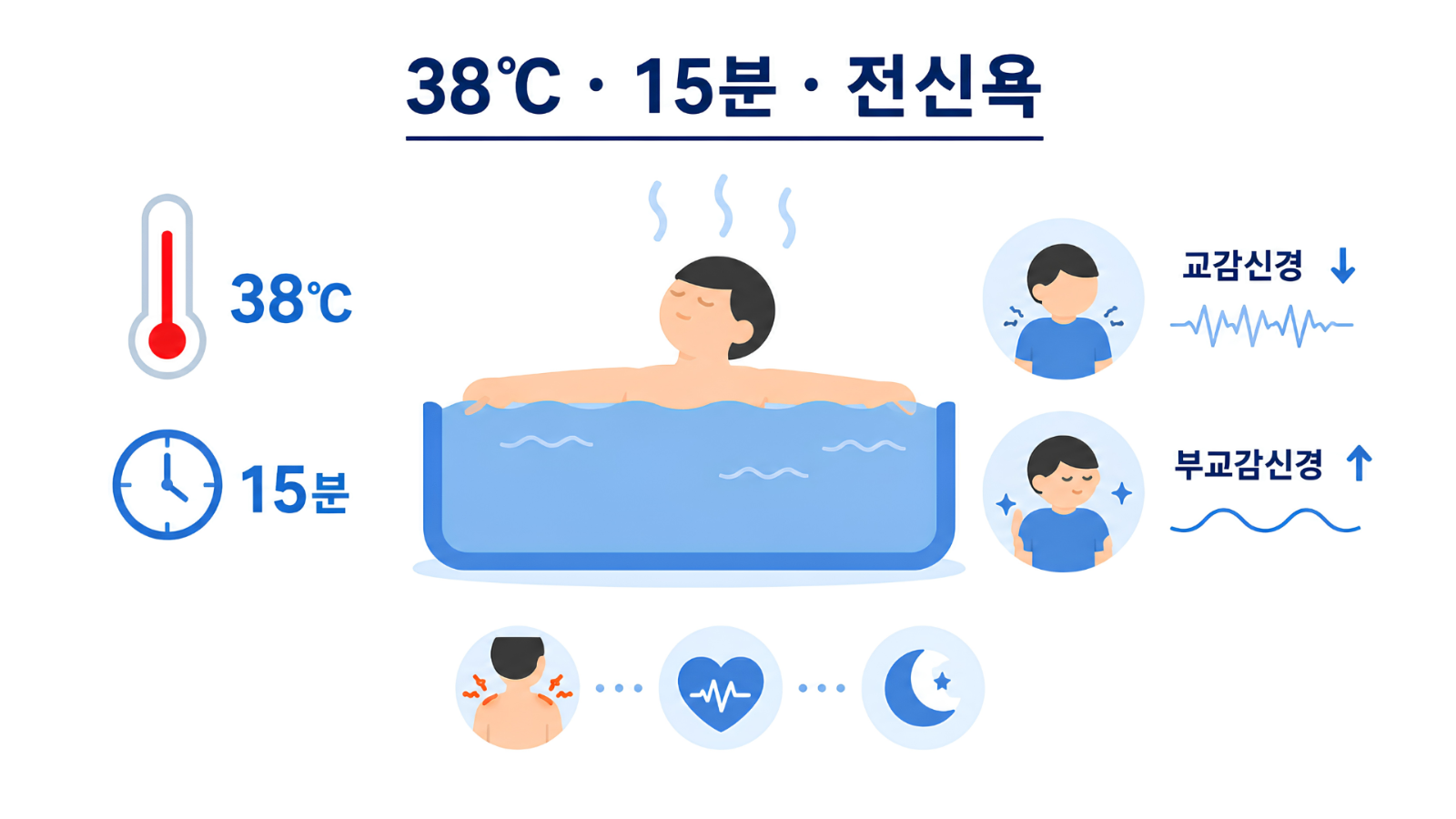
Full body bath for 15 minutes in 38℃ lukewarm water
There are various ways to stimulate the parasympathetic nervous system, such as regulating breathing, controlling diet, and practicing yoga or stretching. However, the easiest method is to slightly change the way you bathe. The method is surprisingly simple.
The water temperature should be 38℃ (up to 40℃ is fine if it feels cold).
The time is about 15 minutes.
Full body bath up to the shoulders
It is so simple it might sound anticlimactic. However, numerous studies have revealed that soaking in lukewarm water suppresses sympathetic nervous system activity and stimulates the parasympathetic nervous system. Conversely, water hotter than 42°C actually stimulates the sympathetic nervous system, driving the body into a state of heightened alertness. Please remember that the feeling of 'refreshment' comes from this temperature regulation, not from the heat itself.
📘 Onlive Guide Points
Not hot, but lukewarm. A 15-minute full-body bath at 38°C is the formula for relieving tension.
A shower isn't enough.
And, two hours before falling asleep is the golden time.
Many people usually substitute a bath with a shower (especially in Korean households where shower stalls are more common than bathtubs). However, while a shower can clean your body, it cannot fully relieve tension and fatigue. Try to consciously take a proper soak in a bathtub, at least during this time.
One more thing. The best time to fall asleep is about two hours after finishing your bath. This is because the gradual cooling of your body's core temperature naturally induces drowsiness. If you finish your bath two hours prior to your bedtime, you will be able to sleep much more deeply.
The easiest and most readily available tool for stimulating the parasympathetic nervous system is a bath. I hope you make good use of this to energetically navigate your new life.
📘 Onlive Guide Points
Showers are for cleanliness, and baths are for recovery. Finishing them two hours before bedtime ensures a good night's sleep.
Hayasaka Shinya
Specialist in Hot Spring Therapy, Doctor of Medicine, Professor at Tokyo Metropolitan University
Director of the Hot Spring Medical Science Research Institute, Japan Health Development Foundation
The leading expert in the medical study of bathing as a lifestyle habit. Author of *The Best Bathing Method* (Yamato Shobo) and many others.